Soffit: The Part You Don’t See, But Your Roof Depends On
Soffit panels cover the underside of your roof overhang. They are easy to overlook from the ground, but they control the airflow that keeps your attic dry, your shingles performing, and your energy bills manageable.
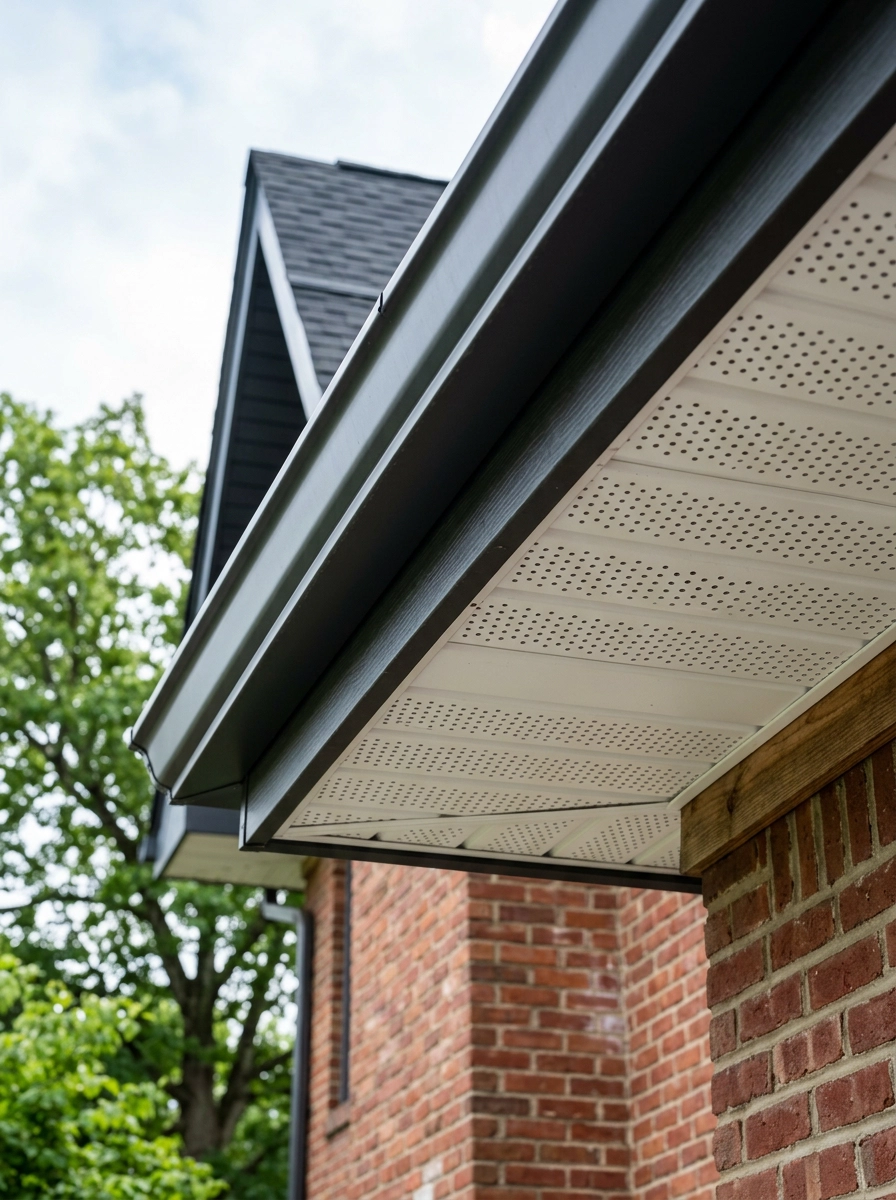
On most homes in Southeastern Pennsylvania, soffit panels are made of vinyl or aluminum and run along the entire perimeter of the roof overhang. Many of those panels are perforated or vented — and those small openings serve a purpose that is far more important than most homeowners realize.
Vented soffit provides the intake airflow that your roof’s ventilation system depends on. Fresh air enters through the soffit, moves up through the attic space, and exits through the ridge vent at the peak of the roof. When soffit is damaged, blocked, or missing, that airflow stops and the problems that follow are expensive.
WHY SOFFIT MATTERS
Three Problems That Start at the Soffit and End Up Costing You a Roof
Blocked Ventilation and Premature Shingle Aging
In summer, trapped heat builds against the underside of the roof decking and accelerates shingle deterioration from below. A new roof installed over a poorly ventilated attic will age faster than the warranty suggests.
We check soffit ventilation during every roof consultation and will tell you if the intake airflow is compromised before any new shingles go on.
Moisture Buildup, Condensation, and Attic Mold
In winter, warm air from inside the house rises into the attic. Without proper soffit ventilation to maintain airflow, that warm air meets the cold underside of the roof decking and condenses.
Over time, that condensation saturates the decking, grows mold, and can drip onto insulation and ceiling surfaces below. Homeowners sometimes mistake this for a roof leak when the real cause is a ventilation failure at the soffit. Replacing the soffit with properly vented panels restores the airflow cycle and eliminates the moisture source.
Animal Entry and Pest Infiltration
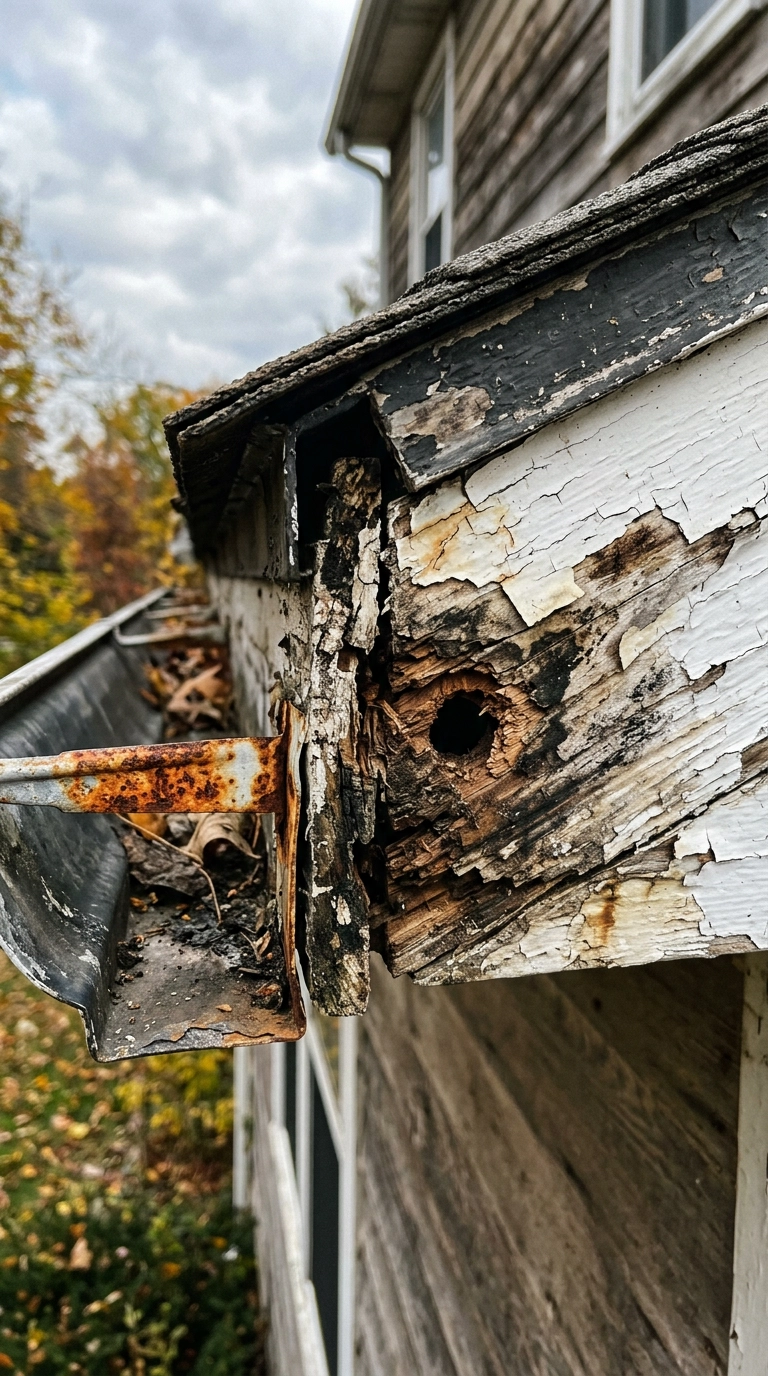
Cracked, sagging, or missing soffit panels create openings that birds, squirrels, bats, and insects use to enter the attic. Once animals are in the attic space, they damage insulation, chew wiring, and create health hazards. Repairing the soffit closes the entry point and prevents reentry.
If animal activity is suspected, we recommend having the attic cleared by a pest professional before the soffit is sealed — closing the opening with animals still inside creates a bigger problem than leaving it open.
We Check What Is Underneath Before the New Shingles Go On.
Soffit damage is one of the most common issues we find during a roof tear-off — and one of the easiest to miss from the ground.
When you schedule a roof consultation with Full House Roofing, we inspect the soffit as part of our standard assessment and let you know what we find. If the soffit is in good shape, we will tell you that. If it needs attention, we will explain why and give you a clear scope for addressing it alongside the roofing work.
Or Call Us Directly