Whether you’re in a historic home in Birdsboro or a newer build in Montgomery County, your roof is the unsung hero of your house. It takes the brunt of Pennsylvania’s humid summers, heavy snowfalls, and those unpredictable spring storms.
But every hero has its limit. While a few missing shingles might just need a quick fix, there comes a point where “patching it up” is just throwing good money after bad.
If you’re wondering whether your roof is nearing the end of its watch, here is how to spot the difference between a minor repair and a necessary replacement.
1. The Calendar Doesn’t Lie: Checking the Age
Most asphalt shingle roofs, which are the most common type we see throughout Berks and Chester Counties, are designed to last between 20 and 25 years.
If your roof was installed over a previous layer (a “lay-over”), that lifespan can drop significantly. If you’ve hit the two-decade mark, you’re in the “replacement window.” Even if it looks “okay” from the ground, the internal components like the underlayment are likely reaching their expiration date.
2. Visual Red Flags from the Ground
You don’t need to climb a ladder to see the warning signs. Take a walk around your yard in Birdsboro or Reading and look for these “tells”:
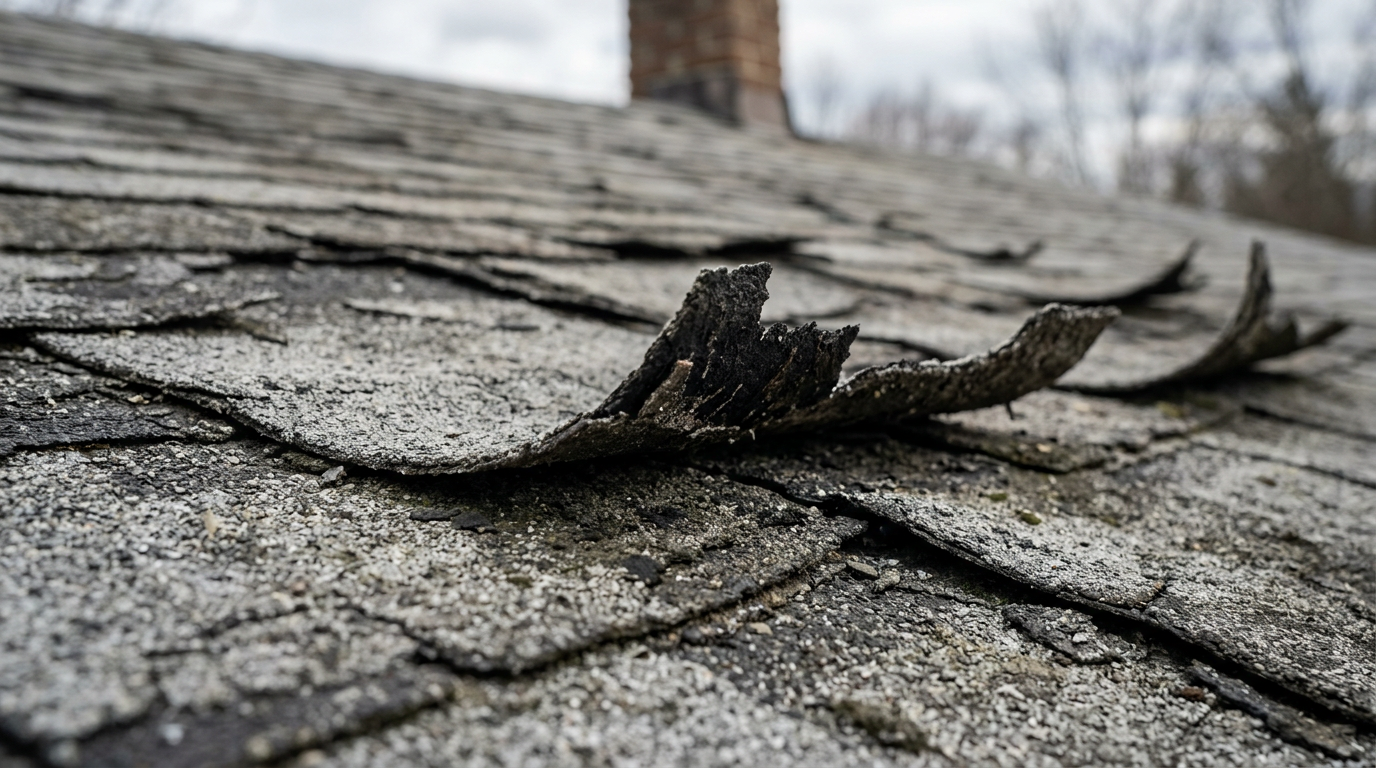
- Curling or Clawing: Shingles that turn upward at the edges or shrink in the middle are losing their ability to shed water.
- The “Bald” Look: Look for dark patches where granules have worn off. Check your gutters; if they’re full of sandy debris, your shingles are essentially “balding” and losing their UV protection.
- Visible Sagging: This is an emergency sign. A sagging roofline often indicates structural damage or rotting decking underneath, which a simple repair cannot fix.
3. The Attic “Light Test”
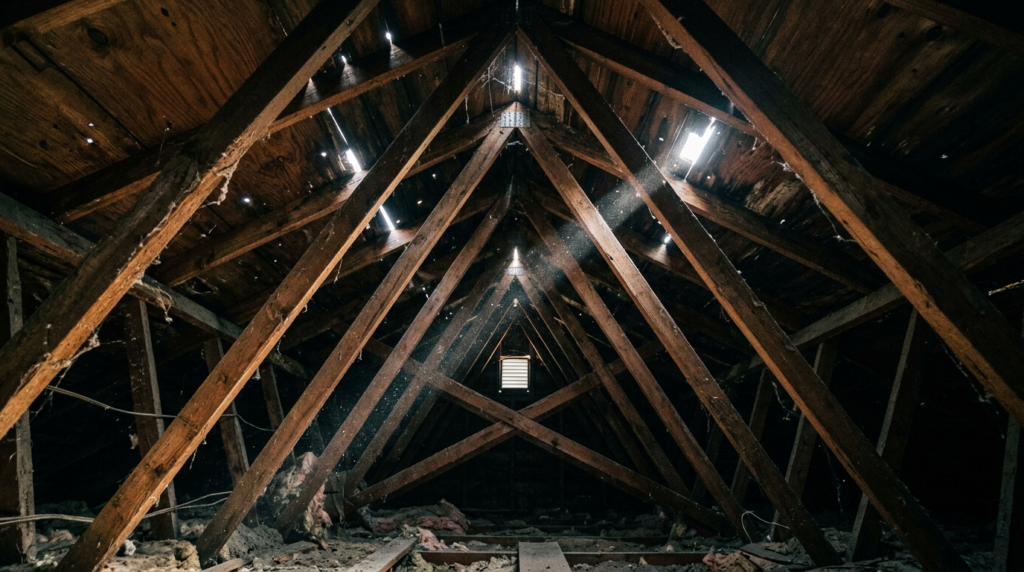
One of the easiest ways to check your roof’s health is to head into the attic on a sunny day. Turn off the lights. If you see pinpricks of daylight coming through the roof boards, water is definitely getting in. While a single hole might be repairable, multiple light leaks across the span mean the integrity of the roof has been compromised.
4. Recurring Leaks (The “Whack-a-Mole” Problem)
If you find yourself calling a contractor every time a storm rolls through Montgomery County, you aren’t just repairing your roof, you’re prolonging the inevitable.
Pro-Tip: If repairs are totaling more than 25-30% of the cost of a new roof, or if you are repairing the same leak multiple times, a full replacement is the more fiscally responsible move in the long run.
Repair vs. Replacement: At a Glance
| Feature | Repair Might Be Enough | Replacement is Likely Needed |
| Age | Under 12-15 years | Over 20 years |
| Damage Area | Localized (e.g., one branch hit) | Widespread or across multiple slopes |
| Shingle Condition | Supple and intact | Brittle, cracking, or losing granules |
| Recent Storms | Minor wind uplift | Severe hail or structural impact |
Why Local Expertise Matters
A roof in the greater Birdsboro area deals with specific climate challenges that a “big box” national company might overlook. At Full House Roofing, we understand the local weather patterns across Berks, Chester, and Montgomery Counties. We don’t believe in selling you a roof you don’t need, but we won’t let you waste money on a repair that will fail in six months.
Is your roof showing its age? Don’t wait for the next big PA storm to find out for sure.
Contact Us